Clear Stubborn Warts With Physician-Led Care
Warts are common, harmless in most cases, and frustrating when drugstore remedies fail. At Laura E. Babe, M.D. in Ann Arbor, MI , board-certified physician Dr. Laura E. Babe removes warts on the hands, feet, face and other areas in the office, with treatment matched to the size, type and location of each growth. As an MDVIP-affiliated practice, we see fewer patients so we can spend real time on your concerns, including small issues that affect your comfort and confidence.
Request an AppointmentWhat Is a Wart?
A wart is a small, noncancerous growth on the skin caused by the human papillomavirus (HPV). The virus infects the top layer of skin, often through a tiny cut or scrape, and causes the skin cells to grow faster than normal. Warts often appear on the palms, fingers and around the fingernails, and they can also show up on the soles of the feet, the elbows, the knees, the face and the legs. They may form alone or in clusters, and they can vary in size.
Warts are not dangerous, but they can be painful, unsightly and contagious, and they can spread to other parts of the body or to other people through direct contact. Over-the-counter treatments often fail on thicker or long-standing warts. That is when a visit to a physician makes sense.
Common Types and Symptoms of Warts
Warts look different depending on where they grow. Warts on the hands and feet can cause discomfort or pain, especially in areas that take pressure or friction. Common signs include:
- Common warts: fleshy, tender bumps with a grainy or rough surface, usually on the fingers, hands, elbows or knees.
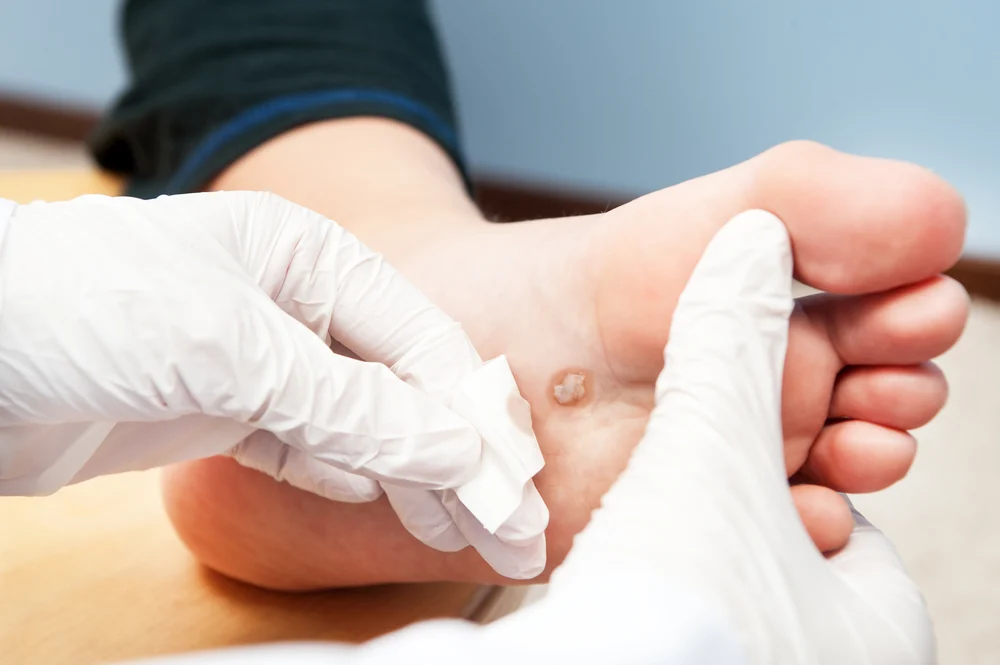
- Plantar warts: warts on the soles of the feet that can feel like a pebble in your shoe when you walk or stand.
- Foot warts with black specks: light brown or flesh-colored bumps with small black dots, which are tiny clotted blood vessels.
- Flat warts: smaller, smoother growths that often appear in groups on the face and legs.
If a growth changes in color, shape or size, bleeds without injury, or does not look like a typical wart, have it checked. Dr. Babe can examine it and determine whether a mole check or further evaluation is the right next step.
Wart Removal With Cryotherapy
Warts can come back even after treatment, so choosing an effective approach helps reduce future outbreaks. Freezing, also called cryotherapy, is a common and successful wart treatment. During the visit, Dr. Babe applies liquid nitrogen directly to the wart. This freezes the infected tissue and causes a blister to form under and around it. The frozen cells usually fall off within about a week.
Small warts often clear after a single session. Larger or thicker warts may need more than one treatment, with repeat sessions usually scheduled every 1 to 3 weeks until the wart is gone. Each session takes only a few minutes, and most patients return to their normal routine the same day.
Aftercare and What to Expect
Following your aftercare instructions helps the area heal well and gives you the best result. Aftercare may include:
- Keeping the treated area clean and dry
- Covering it with a bandage if it rubs on shoes or clothing
- Leaving the blister alone and avoiding picking or popping it
Common side effects include mild pain, redness and blistering at the treatment site. Less common side effects include scarring or changes in skin color. Dr. Babe will review what to expect for your skin and the area being treated.
Why Choose Our Ann Arbor Practice for Wart Removal?
Wart removal is one of several minor procedures Dr. Babe performs in the office, so you do not need a separate specialist visit for a simple skin concern. As an MDVIP-affiliated, personalized primary care practice, we keep our patient panel smaller. That means unhurried appointments, a physician who knows your health history, and time to answer your questions about treatment, recurrence and prevention.
Wart Removal FAQs
What causes warts?
Warts are caused by the human papillomavirus (HPV). The virus enters the skin through small cuts or breaks and causes skin cells to grow quickly, forming a raised or rough bump. Warts can spread through direct contact or by touching surfaces such as shared showers or pool decks.
Does wart removal with cryotherapy hurt?
Most patients feel a brief cold, stinging or burning sensation while the liquid nitrogen is applied. The area may feel tender for a day or two afterward as a blister forms. The treatment takes only a few minutes.
How many treatments will I need?
Small warts often clear after one session. Larger or thicker warts may need several treatments, usually spaced every 1 to 3 weeks, until the wart is fully gone.
How long does it take for a wart to fall off after freezing?
After cryotherapy, a blister forms around the treated wart, and the frozen tissue usually falls off within about a week. Healing time can vary with the size and location of the wart.
Can warts come back after treatment?
Yes. Because warts are caused by a virus, they can sometimes return or new ones can appear. Following aftercare instructions, avoiding picking at warts and keeping feet dry in shared spaces can help reduce the chance of recurrence.
When should I see a doctor about a wart?
See a doctor if a wart is painful, spreading, bleeding, changing in appearance, or not responding to over-the-counter treatment. You should also have any growth checked if you are unsure whether it is a wart, or if you have diabetes or a weakened immune system.
Can I treat plantar warts on my feet in the office?
Yes. Dr. Babe can evaluate and treat plantar warts on the soles of the feet. These warts may need more than one session because they tend to be thicker and grow inward from pressure when you walk.
Say Goodbye to Bothersome Warts
If a wart or other skin growth is causing pain or getting in the way of daily life, Dr. Babe can help. Call Laura E. Babe, M.D. at (734) 761-2165 or request an appointment online to schedule wart removal in Ann Arbor, MI .